What if I told you that your inability to say no has nothing to do with being kind, but everything to do with a deep fear buried inside you?
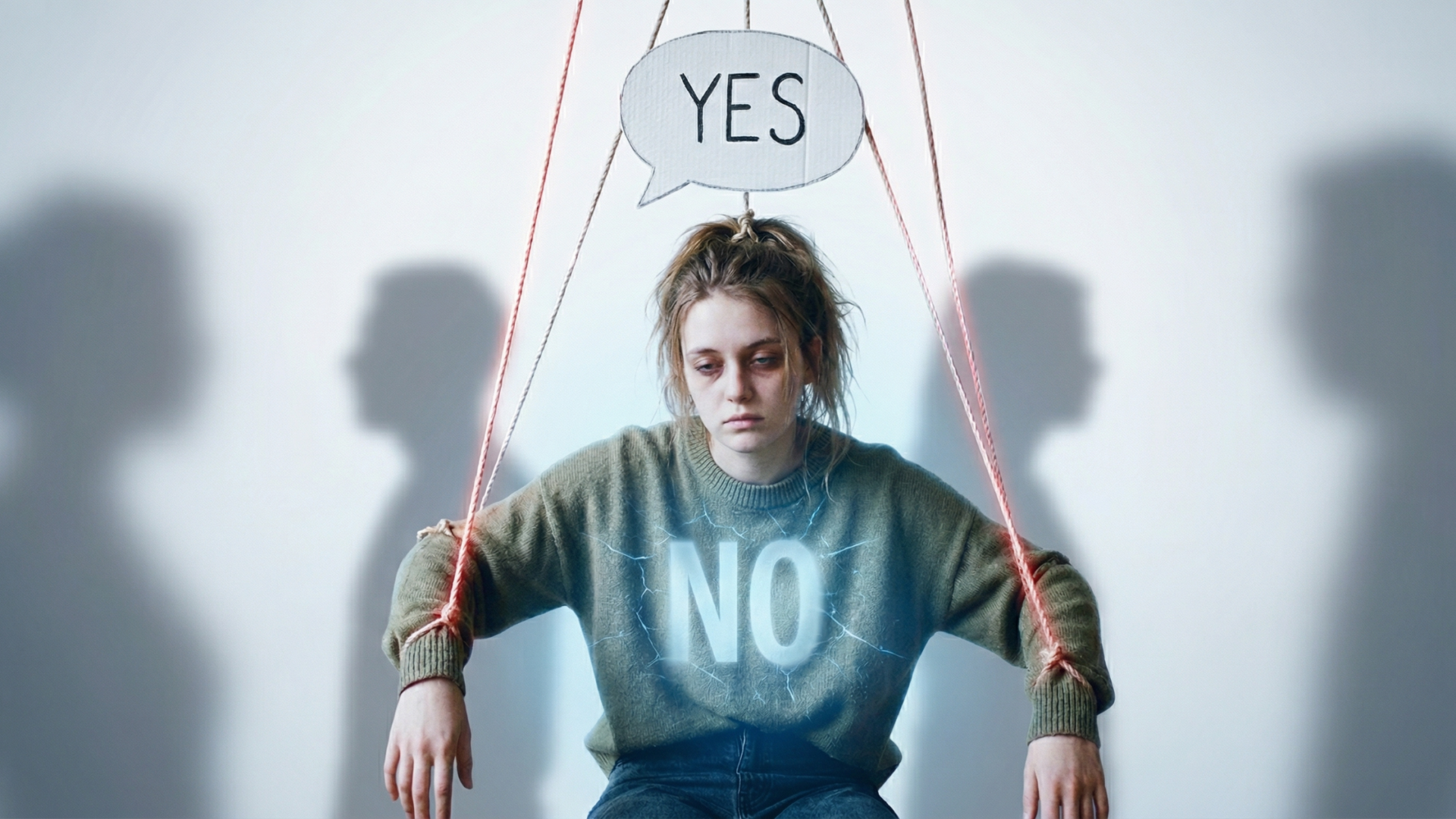
You said yes again. It slipped out involuntarily once more. Every cell in your body screamed no, trying to protect your time, your energy, your sanity. You rehearsed saying no countless times to yourself. But when you opened your mouth, the word that came out was yes. And now here you are, doing something you never wanted to do, for someone who will never know what it costs you. Doing this makes someone else happy while making you intensely unhappy. This is not generosity. This is not kindness. This is a cycle that slowly drains the energy from your life. A swamp that harms you, constantly dragging you down. And worst of all, you are aware of it. You always knew. But knowing was not enough to stop you. The word no sits in your throat like a stone you cannot swallow, and you do not know how it got there.
The problem of not being able to say no rarely has to do with the word itself. The problem has to do with what you believe will happen when you say no. You may also fear a reaction that will be unpleasant for you. At some point in your past, you learned that your own needs are less important than the comfort of others. You learned that saying no means conflict, rejection, abandonment, or withdrawal of love. No one responded maturely to your no. Your brain recorded these lessons perfectly and now protects you from the imagined catastrophe of a two-letter word.
For most people, this pattern begins in childhood. You grew up in a home where you had roles to play: keeping the peace, not causing trouble, making yourself useful enough to deserve your place. Saying no was dangerous. It meant anger, disappointment, or worse, being ignored. It was perhaps a word that drove a wedge between you and your loved ones. So you learned to say yes in order to avoid upsetting them at all costs. You became so good at anticipating their needs that you forgot you had your own.
Others learn this pattern through relationships. You loved someone who made you feel that your boundaries were proof of your selfishness. Every time you tried to protect yourself, you were met with guilt, manipulation, or cold silence. Eventually, you stopped trying. Rather than fighting for your own needs, you chose to lose yourself in theirs.
But here is what happens when you cannot say no. You say yes with your words, but your body says no through exhaustion, resentment, and quiet rage. You become a person who is physically present but emotionally absent. People feel your reluctance even when you hide it. The help you give is hollow, and everyone knows it except you.
The people who cannot say no often believe they are being kind. But there is nothing kind about abandoning yourself. There is nothing generous about giving from an empty cup. What looks like selflessness is often self-erasure, a slow disappearing act where you trade pieces of yourself for the temporary relief of avoiding conflict.
And the cruelest irony is this. The people who cannot say no often attract those who never stop asking. Your endless availability does not inspire gratitude. It inspires more requests. The more you give, the more expectations grow. The more sacrifices you make, the less visible you become. You turn into an ordinary object. Reliable, always there, and completely taken for granted.
Saying no is not cruel. It is clarity. It shows people where you end and they begin. You set your boundaries. No one can cross those boundaries. It preserves your energy for the things that truly matter to you. It ensures that the things you say yes to have meaning. Without no, your yes has no value.
Learning to say no is not about being selfish. It is about being honest. It is about accepting that you are a human being with limits, needs, and a right to exist beyond being useful to others. People who love you will not abandon you when you say no. They will respect you more. And those who leave were only there for what they could get from you. They were opportunists.
If you cannot say no, ask yourself what you are truly afraid of. Not the superficial fear, but the deep fear. The fear that whispers you are only lovable when you are useful. The fear that tells you your needs are a burden. This fear is lying to you. It has been lying to you your whole life. And until you stop believing it, you will keep saying yes to everyone except yourself.